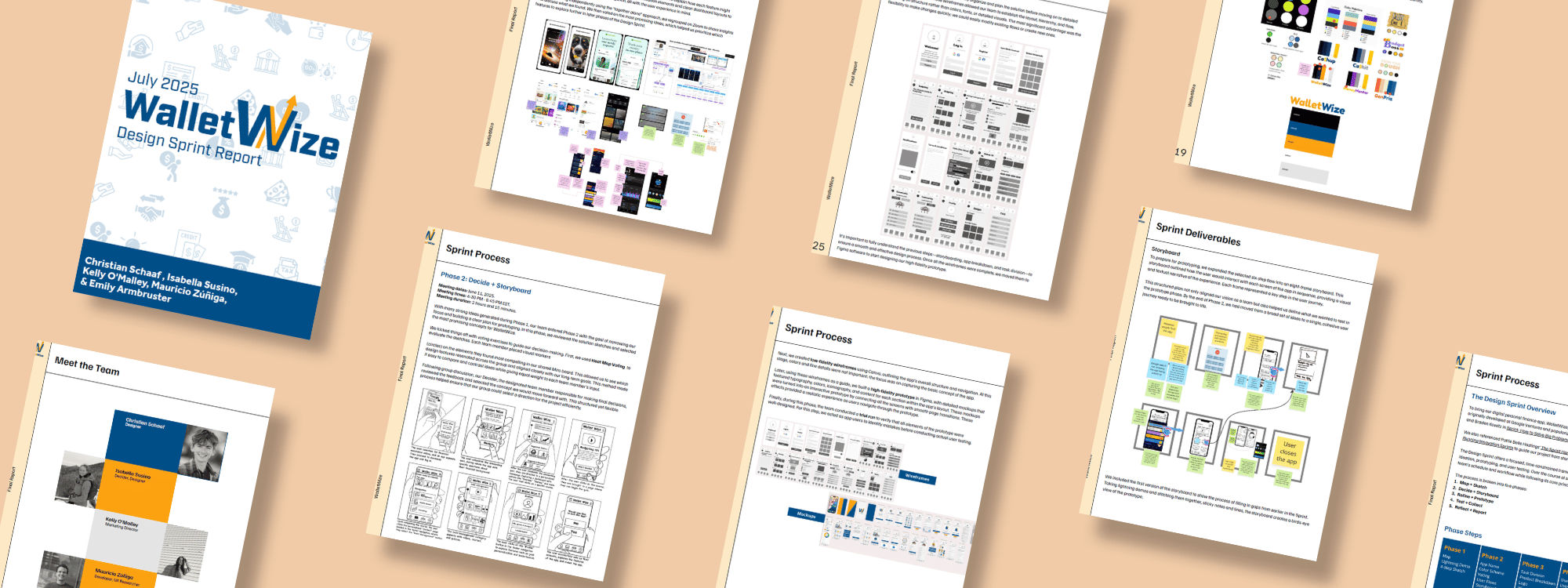
Design Sprint: The Making of WalletWize
To bring WalletWize from concept to prototype, our team used the Design Sprint methodology, a structured, fast-paced framework built to solve big problems and test bold ideas quickly. It helped us align as a team, explore solutions, and validate concepts through prototyping and user feedback.
While the original sprint runs over five consecutive days, we adapted the structure to fit a longer timeline, giving each phase, from mapping and solution sketching to storyboarding, prototyping, and user testing, the time it needed. We paired insights from user interviews with data-driven analysis to evaluate feasibility, usability, and impact. This mix of human-centered design and data-driven validation guided the development of a WalletWize prototype.

The Design Sprint
Phase 1: Map + Sketch
To kick off the Design Sprint, our team started by setting group rules to keep our process collaborative and productive, including voting on ideas, limiting phone use, meeting deadlines, and never deleting contributions without group consent. Setting expectations early gave us a foundation of mutual respect that guided our decisions throughout the Sprint.
From there, we defined our Sprint problem: how do we build a mobile app that teaches Gen Z users about financial literacy in a way that feels modern, engaging, and easy to navigate?
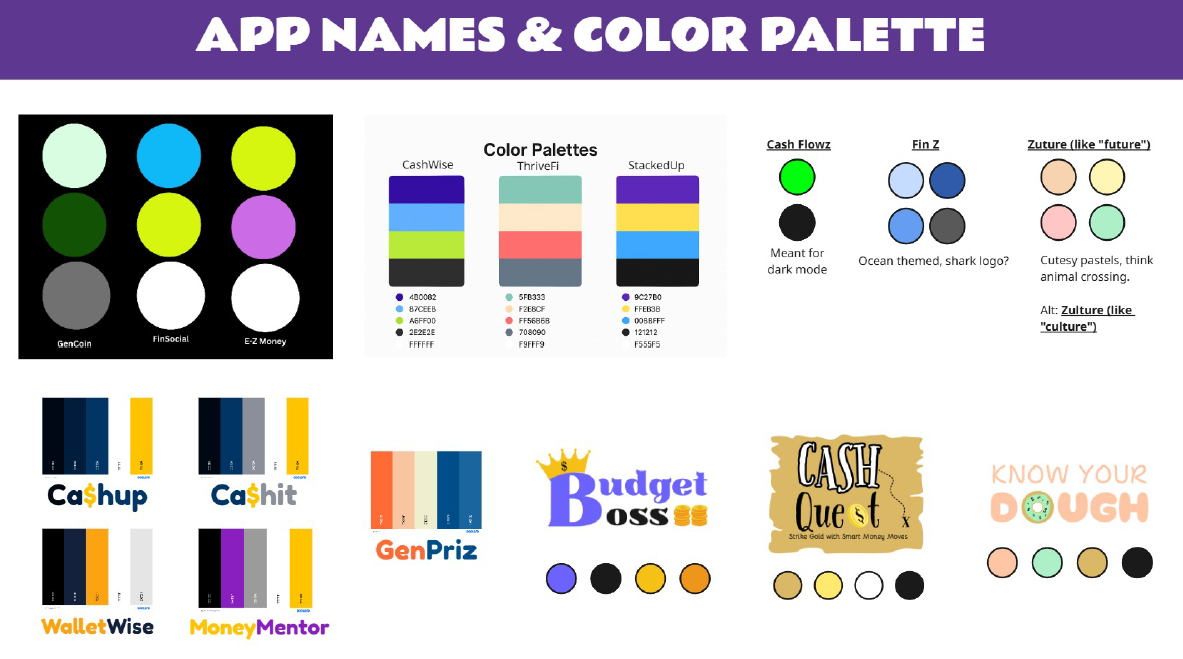
We also voted on long-term goals, app names, and color palettes to align on a shared vision before moving forward.
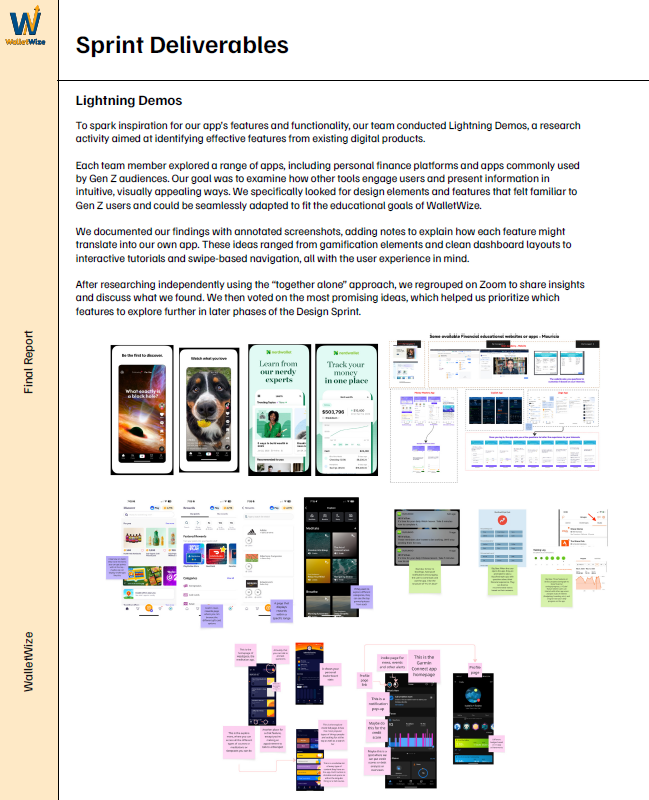
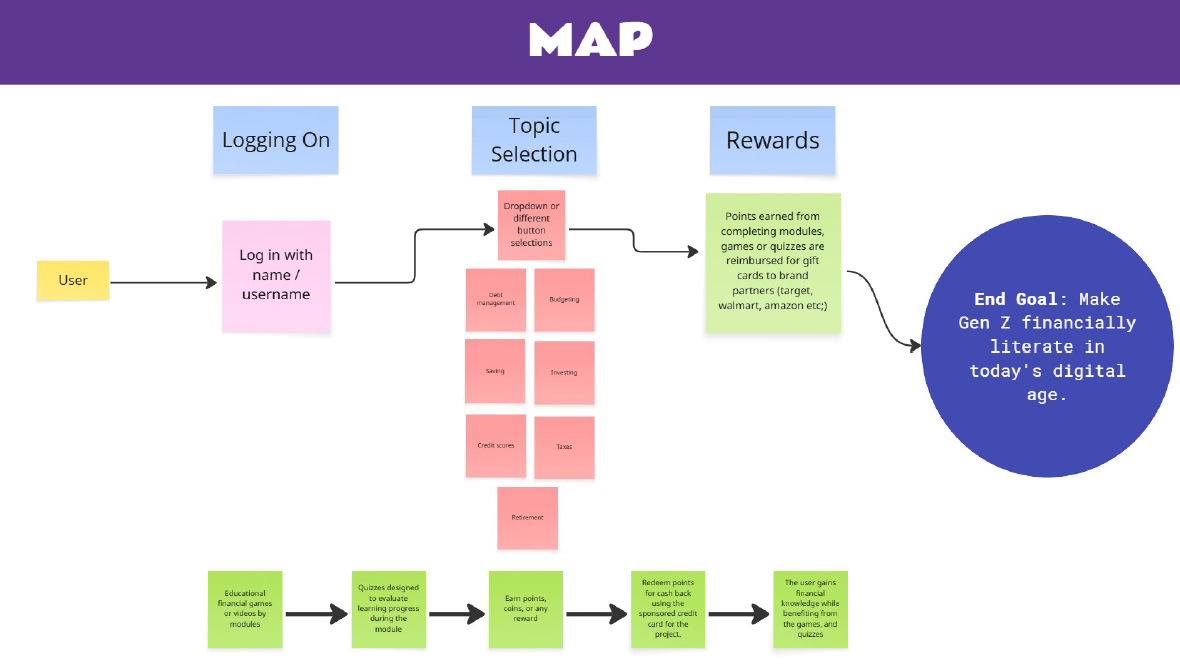
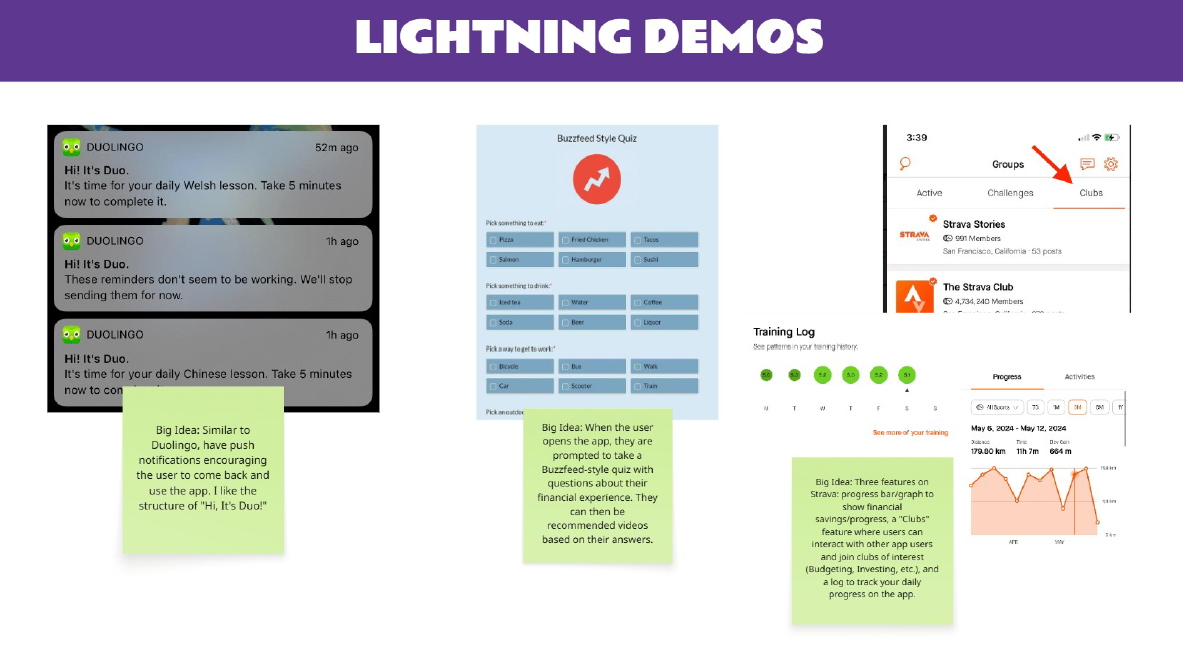
Next, we built a user map to visualize the journey from downloading WalletWize to completing lessons and building better financial habits. We then conducted Lightning Demos, individually researching existing finance and education apps, then regrouping to share findings.
Finally, we completed the 4-Step Sketch (notetaking, ideating, Crazy 8s, and Solution Sketches) to develop and refine our strongest app screen concepts individually before moving into the next phase.
Phase 2: Decide + Storyboard
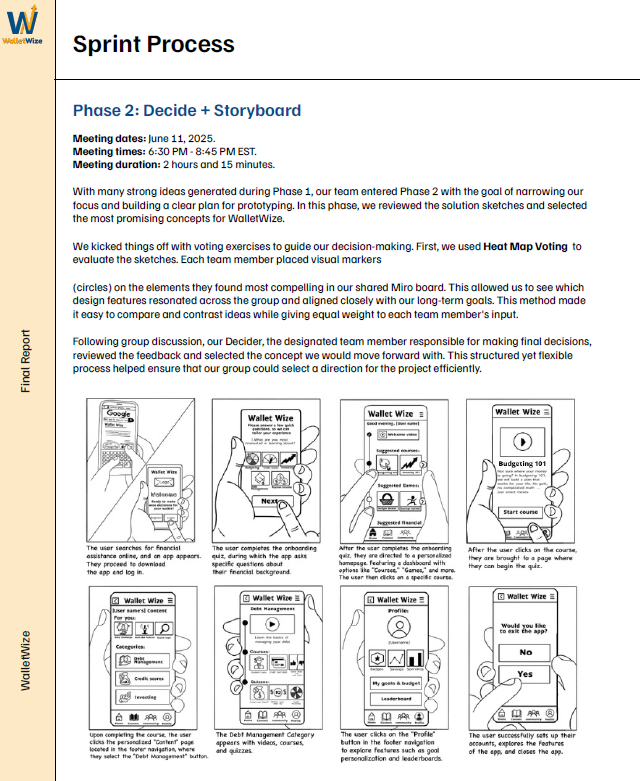
Entering Phase 2, our goal was to narrow our focus and build a clear plan for prototyping. We started by reviewing our solution sketches using Heat Map Voting: each team member placed markers on the elements they found most compelling in our shared Miro board. This made it easy to see which features resonated across the group and aligned with our long-term goals, while giving everyone an equal voice.
From there, our Decider, the designated team member responsible for final calls, reviewed the feedback and selected the concept to move forward with, keeping the process efficient and aligned.
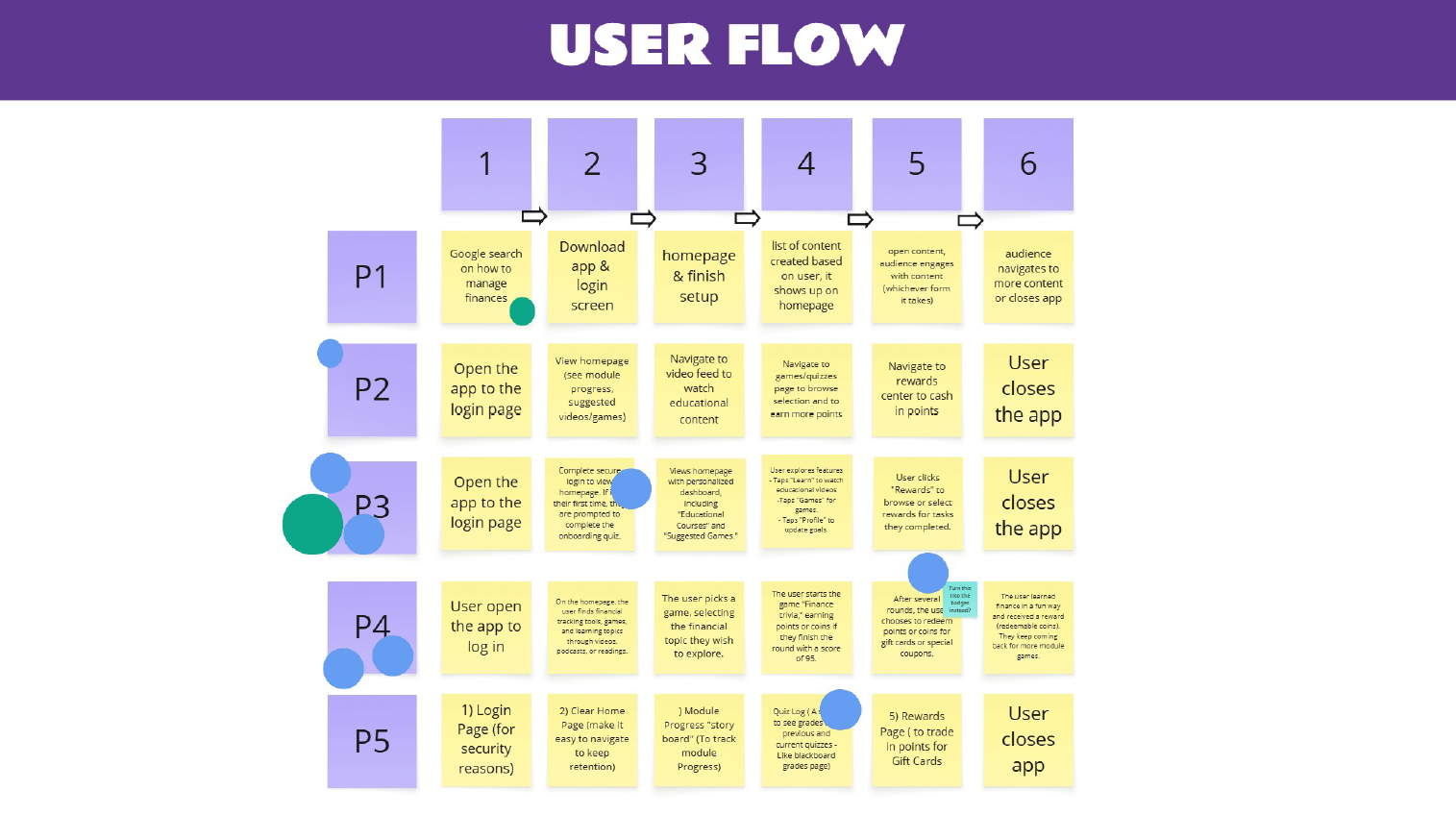
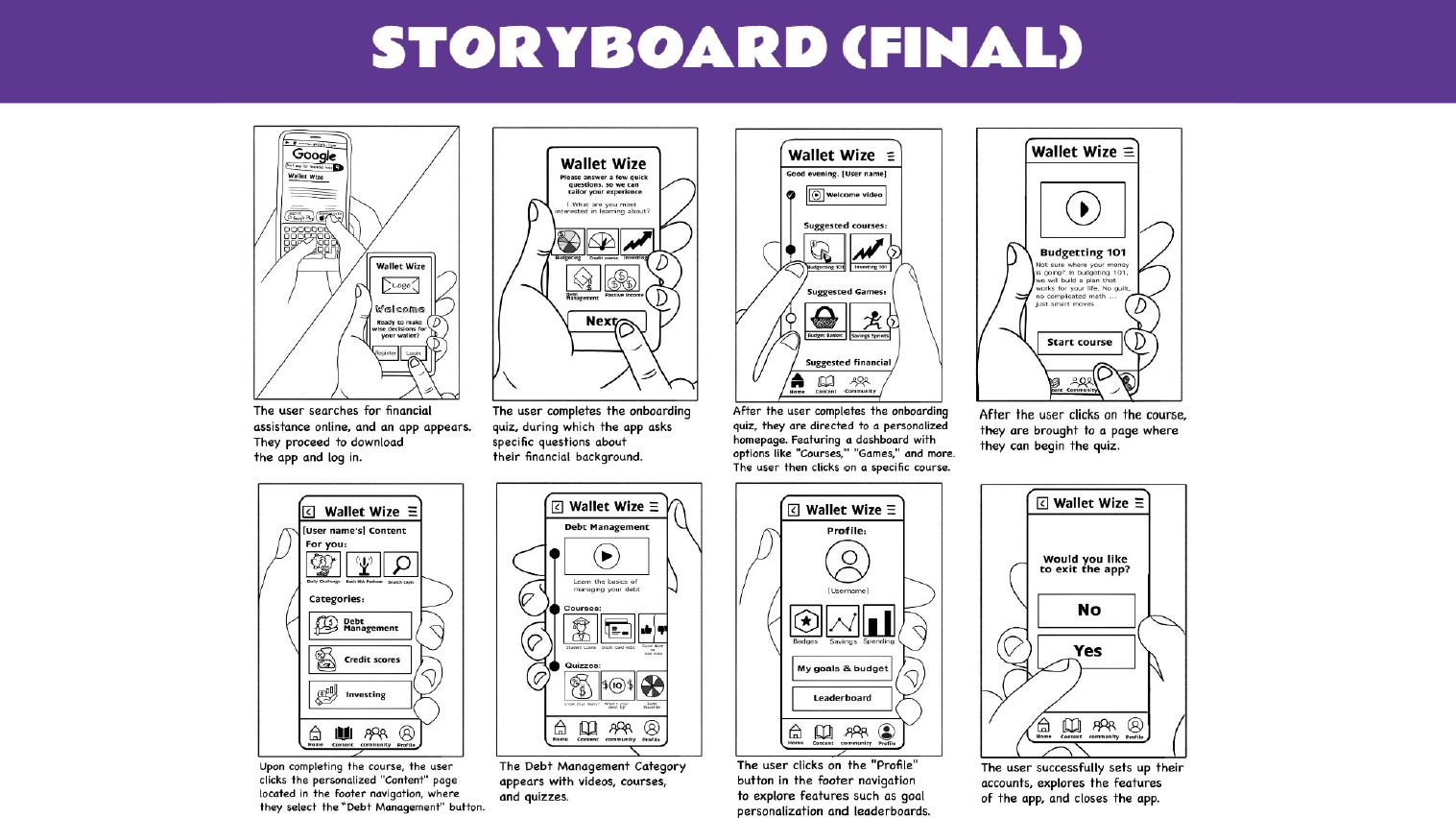
Next, each team member created a six-step user flow mapping how a user might navigate WalletWize from start to finish, covering key actions like onboarding and content selection. We then expanded the strongest flow into an eight-frame storyboard, outlining how a user would interact with each screen in sequence.
By the end of Phase 2, we had moved from a broad set of ideas to a single, cohesive user journey ready to be brought to life.
Phase 3: Refine + Prototype
In Phase 3, our goal was to build a realistic, testable version of WalletWize that we could put in front of real users. We started by revisiting our storyboards as a group, discussing icons, pages, and features to make sure everyone was aligned before moving into production.
From there, we selected our prototyping tools, weighing each team member's experience with different design programs before landing on Canva for wireframes and Figma for high-fidelity prototypes.
To work efficiently, we divided tasks based on each person's strengths, following Google Ventures' five key roles: Makers, Stitchers, Writers, Asset Collectors, and Interviewers.
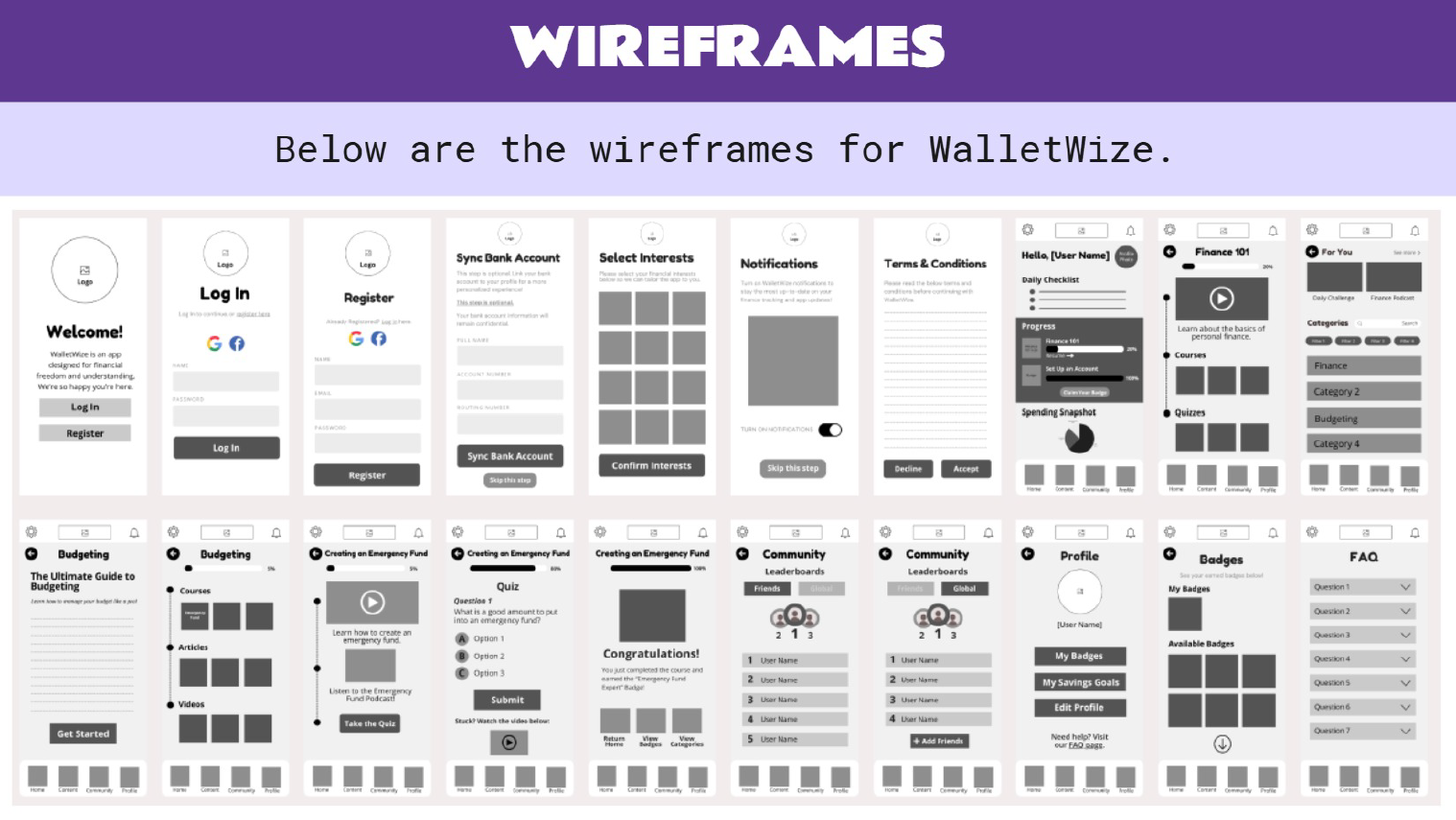
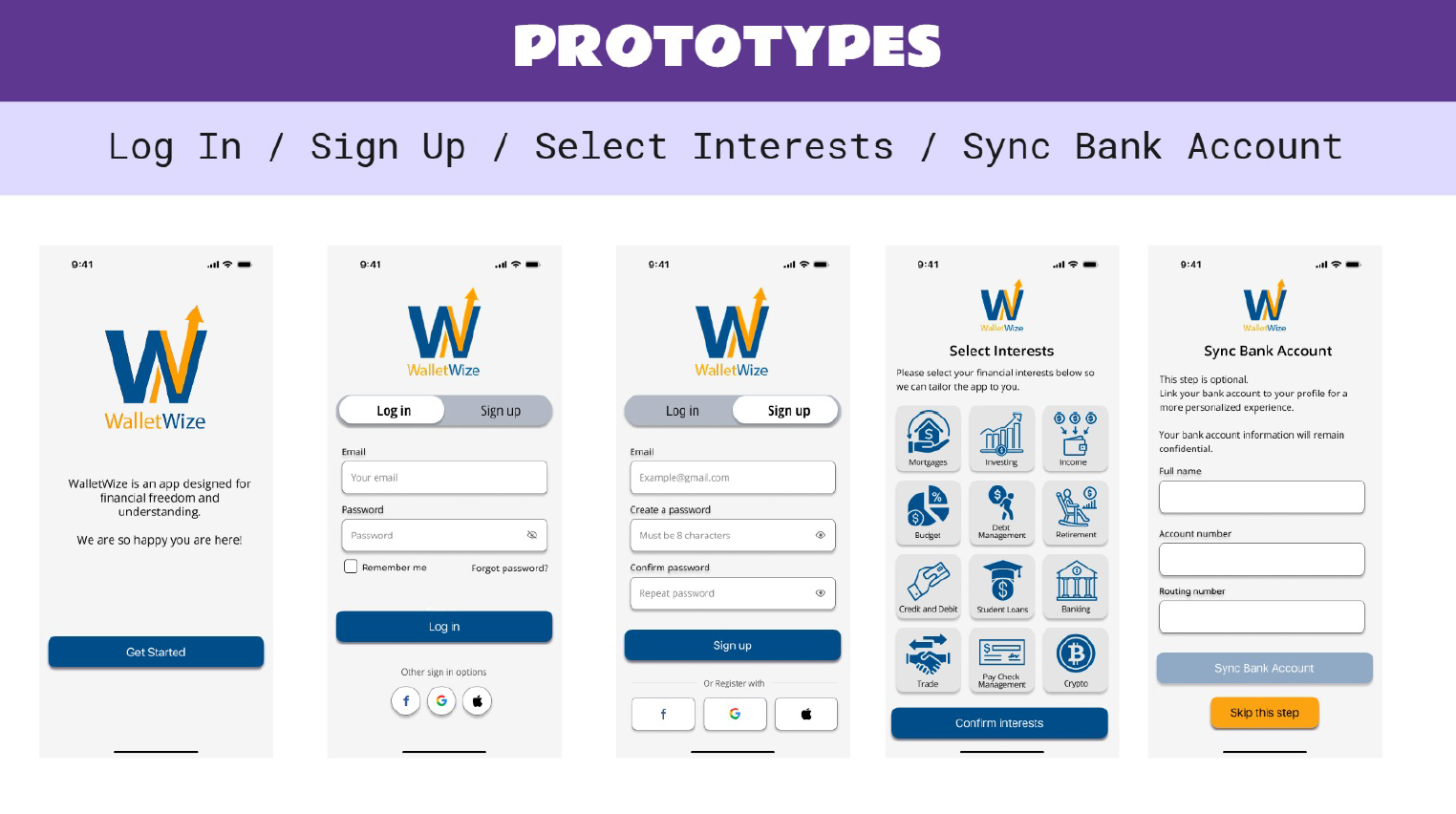
We began with low-fidelity wireframes in Canva, focusing on the app's overall structure and navigation without worrying about color or fine details. Using those as a guide, we built a high-fidelity prototype in Figma, complete with typography, color, iconography, and content for each screen. Connecting all the screens with smooth page transitions brought the prototype to life, creating a realistic experience for users navigating through the app.
Phase 4: Test + Collect
In Phase 4, we put our prototype in front of real Gen Z users to validate our solution and gather meaningful feedback. Our goals were to conduct unbiased user testing, confirm the app addressed our original Sprint problem, and collect data to identify areas for improvement.
In the pre-testing phase, we recruited five users within the Gen Z age range. We selected four key tasks representing WalletWize's core experience, wrote a detailed testing script, and defined how we would capture feedback, including KPIs like task completion time and failure rate.
Testing was conducted over five interviews in a one-and-a-half-hour window via Zoom. Each team member interviewed one unfamiliar user while the remaining four observed silently, logging feedback in real time using Miro.
After that, we collected data through three channels: a Google Survey sent post-session, subjective feedback color-coded by sentiment on a Miro board, and KPIs tracked in Excel, giving us everything we needed to move into meaningful app refinements.
Phase 5: Reflect + Report
In the final phase, we stepped back to evaluate the Sprint experience and document our process and outcomes. As a group, we divided responsibilities for compiling our deliverables, including a comprehensive Design Sprint report summarizing each phase and the steps taken to bring WalletWize from idea to functional prototype.
Throughout the Sprint, we walked away with key lessons that extended beyond the project: the importance of collaboration, clear communication, facilitation, and accountability in meeting deadlines. Working through each phase as a team reinforced how much a shared commitment to the process shapes the quality of the outcome.
On a personal note, I genuinely enjoyed the experience of working as a team throughout this Sprint. The structured format kept us focused and on track, and I appreciated having clear guidelines to work within. It made the process feel manageable even when the work was challenging. The Sprint framework is something I would absolutely embrace again, both for the direction it provides and for the sense of shared purpose it brings to a team.