
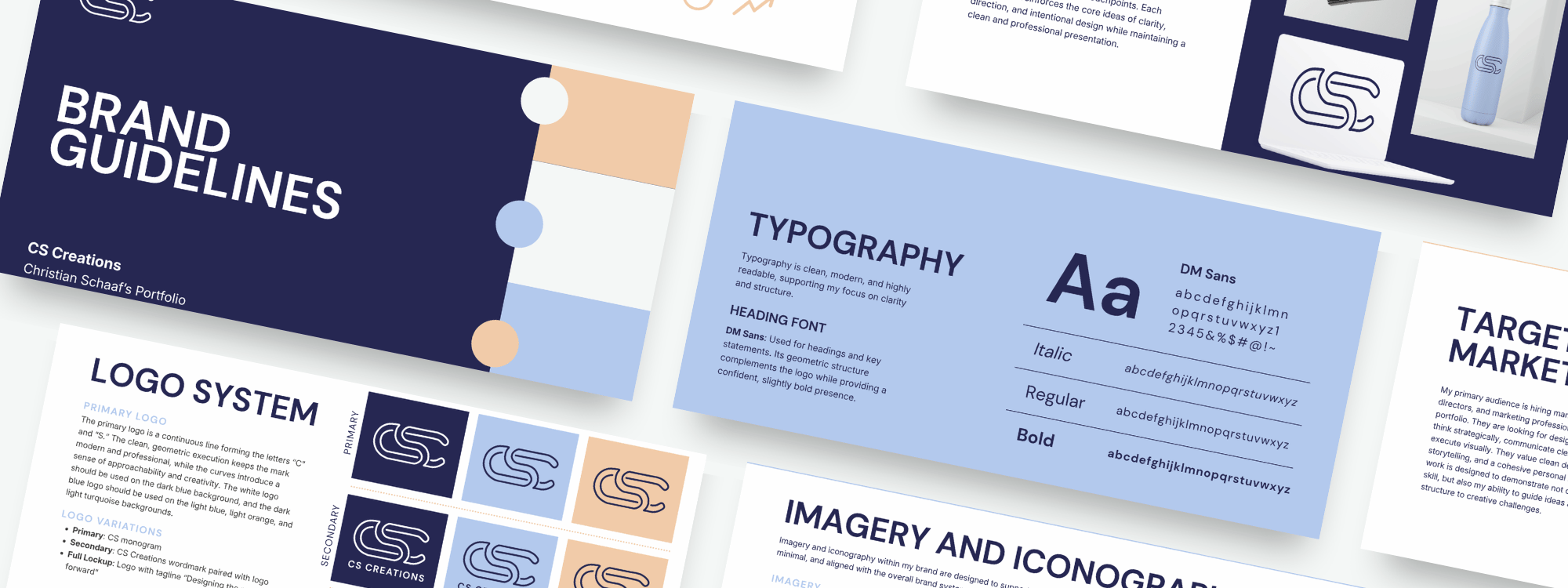
Brand Guidelines: Designing with Intention
A brand guidelines document ensures a uniform, recognizable, and trustworthy identity across all platforms. Without one, branded materials can feel inconsistent, creating confusion and undermining credibility. For my personal brand, I wanted a clear, research-backed framework to guide every design decision.
Process
I began with research, following Brandkit's framework for building and managing digital assets to understand what a strong brand guidelines document should include. From there, I built mine out across nine key sections: mission, target audience, color palette, logo system, typography, brand voice, imagery and iconography, brand applications, and do's and don'ts.
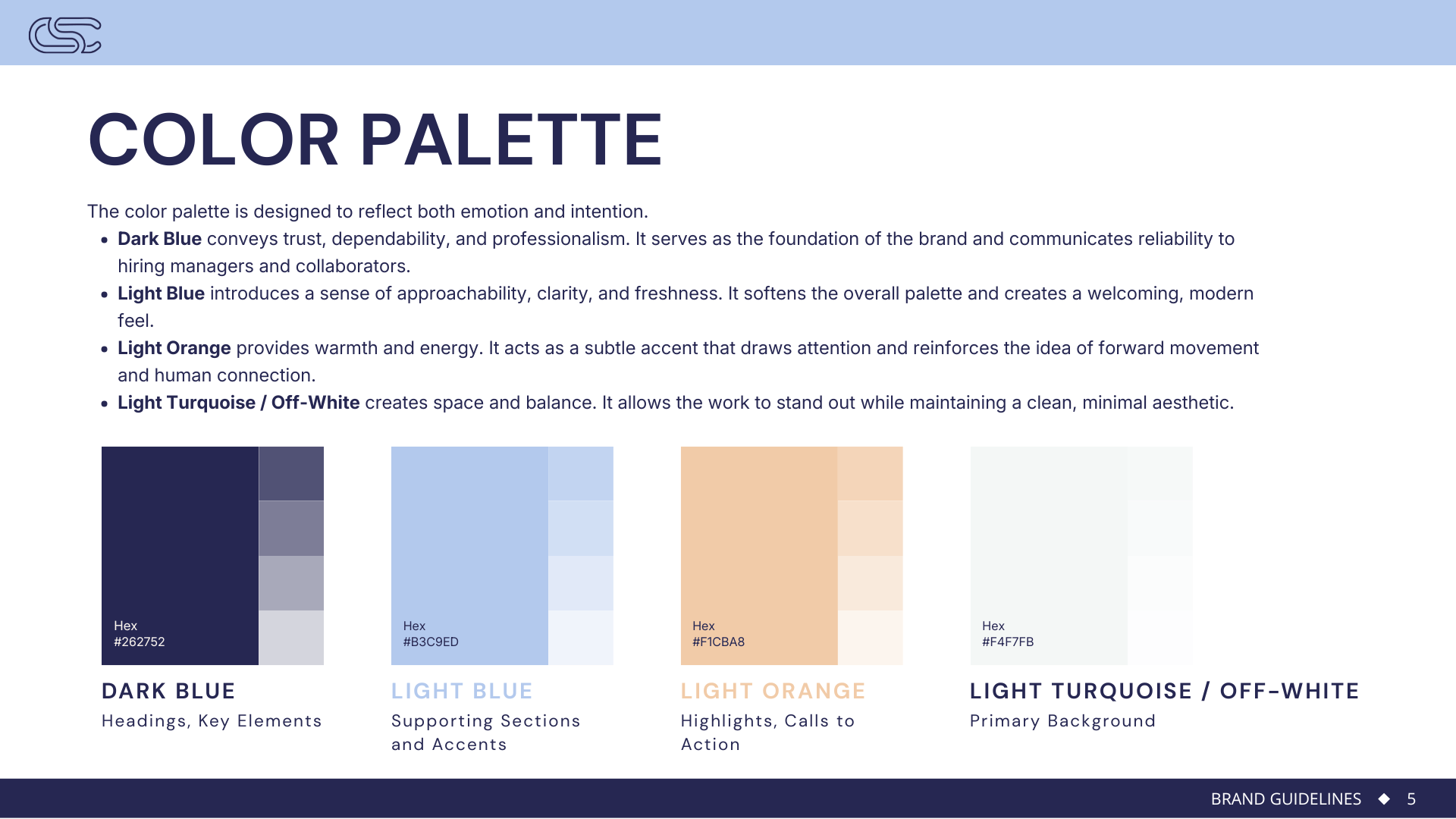
Each section was crafted with intention — not just to document my brand, but to create a practical reference that eliminates guesswork and ensures consistency across every touchpoint. My color palette of orange, light blue, and dark blue was chosen to balance calm, trustworthy, and serene energy with high-contrast, joyful warmth — the emotions I want to bring to every project. My logo merges the letters C and S, a subtle nod to my initials and a mark that is simple, personal, and memorable.


Outcome
The completed guidelines have already been applied across my core branded materials, including my resume, cover letters, business cards, and LinkedIn profile. The biggest takeaway was understanding how clear, documented standards directly impact brand recognition and consistency, making every future design decision faster, more intentional, and easier to execute.
Looking ahead, I would love to expand the guidelines to include motion and video branding, bringing the same level of intention and consistency to animated and multimedia content.